

Enterprise authentication
Configure organization sign-in, MFA claims, automatic provisioning, SCIM, and group mappings.
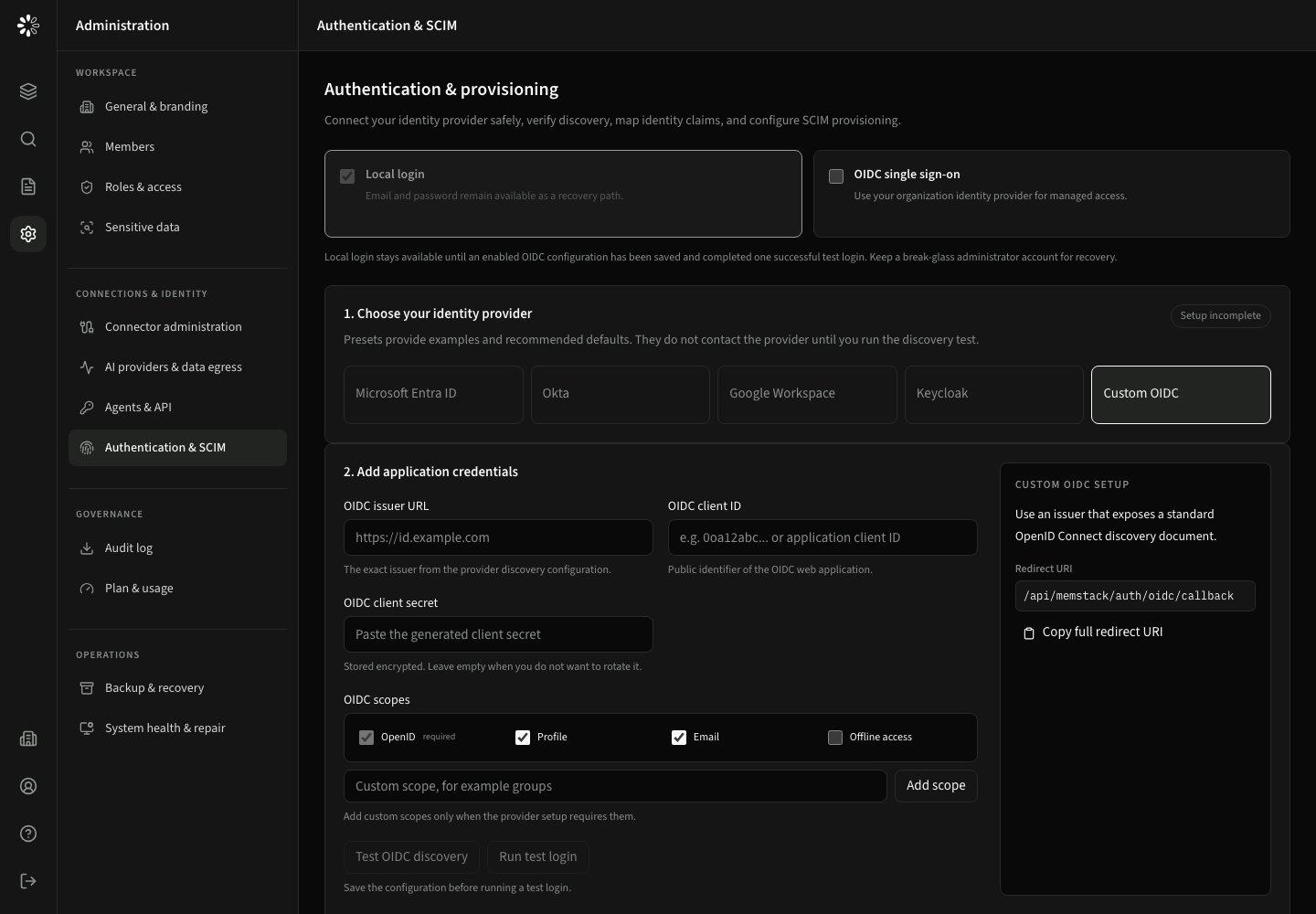
Open Administration → Connections & identity → Authentication & SCIM to connect CogLake to Microsoft Entra ID, Okta, Google Workspace, Keycloak, or another standards-compliant OpenID Connect provider.
OIDC setup
- Enable OIDC single sign-on. Provider and credential controls stay hidden until OIDC is enabled.
- Choose a provider preset and register the displayed callback URL.
- Enter the issuer URL, client ID, and client secret. After saving, CogLake shows only that a secret is configured.
- Configure scopes.
openidremains required;profile,email, andoffline_accessare explicit choices. - Map email, display-name, and group claims under the advanced settings.
- Select the default role and optional required identity-provider groups.
- Run discovery, save, and complete a test login before disabling local login.
MFA policy
The organization-wide control is under Administration → Connections & identity → Authentication & SCIM → Require MFA for every SSO sign-in. The identity provider performs the second factor; CogLake validates its assurance claim before accepting the session. Claim mapping appears only when this policy is enabled.
Personal My settings → Sign-in & security shows whether an identity is provider-managed and links administrators to the organization policy. Local password accounts do not currently have a native CogLake TOTP or WebAuthn enrollment flow; keep local login as a restricted break-glass path when SSO is used.
SCIM and group provisioning
Enable SCIM when your identity provider should create, update, disable, and group users automatically. Token, endpoint, and group-mapping controls remain hidden until provisioning is enabled. SCIM is configured separately from OIDC, so an organization may use provisioning without using the same provider for interactive sign-in.
Safe rollout
- Keep a tested break-glass recovery administrator while changing identity settings.
- Use HTTPS redirect URLs in production.
- Rotate OIDC and SCIM secrets without deleting existing mappings.
- Verify deprovisioning and group removal, not only successful login.